
It’s time to rethink the way in which we view the rooster.
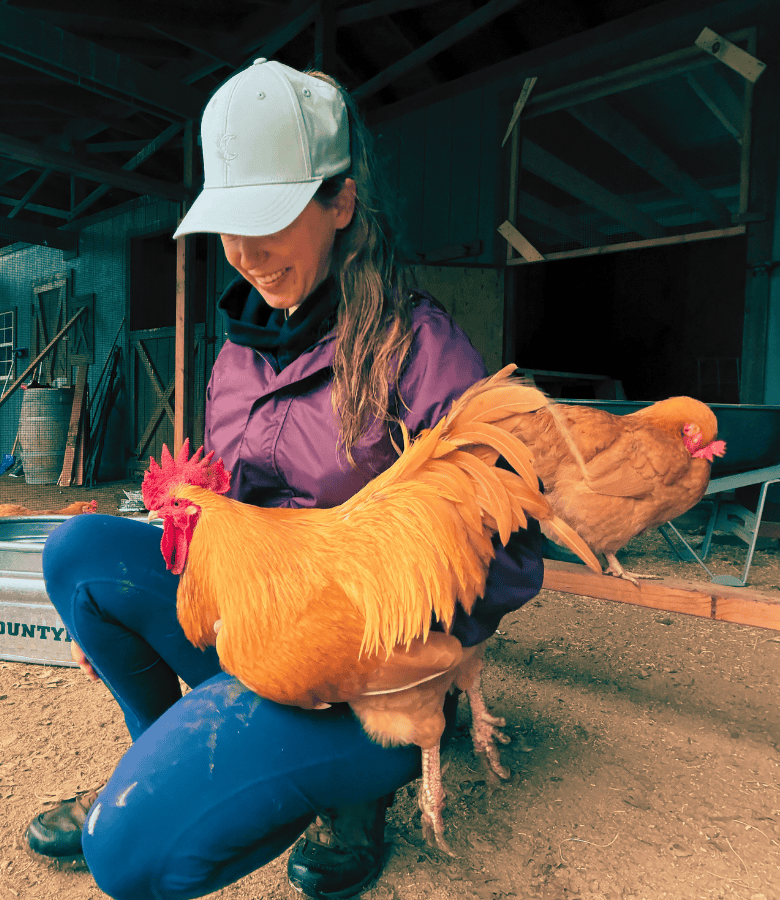
I was living on the island of Puerto Rico when I saw chickens freely roaming on the horse farms where I kept my horses. Hens with their little baby chicks in tow and their roosters standing guard watching over their family. Eating bugs, turning horse manure in the pastures, eating spilled horse grain and fallen fruit while roaming the land in harmony. In most places on the island you can hear the roosters crow as the sun starts to rise as people are starting their day and at various times throughout the day. My absolute favorite time of day was hearing the roosters across the mountain as the day begins, reminding us that it is a new day with new possibilities. I didn’t grow up hearing their sounds but something about their soothing crows felt like a reminder to a life long ago before nature had been slowly filtered out of our daily lives.
There in Puerto Rico the chickens live in harmony with the people as they still remain closer to nature on the island. Chickens, and specifically roosters, are still very much a part of life.
Moving last fall to Northern California after living in Puerto Rico for half a decade, it is a stark realization at how disconnected we are in the states from nature. While I had lived many years in California, I had only lived in cities. Now that my husband and I were looking for some farm land to move to where we could keep our chickens and continue with creating a food forest through permaculture practices my husband and I kept coming up on road blocks. Laws where you could have hens, dogs, cats, horses, etc… but no roosters.
So why the difference in the states? Why are roosters loved and accepted in one location but not the other?
Understanding Chicken Intelligence and Why it Matters for Rooster Laws
Before we can talk about the rooster laws we need to acknowledge something most people, including the policymakers need to understand. Chickens are deeply intelligent and social animals.
Chickens are observant and more emotionally complex than they have been given credit for. When people misunderstand or simply do not know how intelligent they are, it becomes all too easy to justify restrictive laws that remove roosters from their flocks and from farm land.
In an article by Carolynn “K-lynn” L. Smith and Sarah L. Zielinski titled “The Startling Intelligence of the Common Chicken” in Scientific American she speaks on how the research shows that chickens are far more intelligent than people have realized. How they are capable of complex communication within the flock, their problem solving skills and making decisions making on prior experiences, and more.
In another article “Thinking chickens: a review of cognition, emotion, and behavior in the domestic chicken” by Lori Marino Lori speaks to how they are viewed and how peoples perceptions are shaped to believe that chickens are less intelligent than other animals, which as studies have shown, is simply not the case. I’d highly suggested giving both of these wonderful articles a good read as I truly believe they shed such a light on how intelligent the chickens truly are.
Anyone who has spent time around a flock of backyard chickens will start to see the ways in which the chickens enjoy their life with their flock. My chickens love to go bug hunting with their friends, to stand preening next to each other, to lay out with their best friend, wings outstretched sunbathing, running over to their rooster when he tidbits to let his ladies know he found a super tasty bug and he’s saving it just for them, and the list goes on. One of my favorite aspects about the chicken is the reminder to enjoy every day. Be excited about getting out of bed to start your day, to feel the fresh air and sun on your face. To slow down and enjoy the now. That to me is something we are a society are missing and that connection to nature. That connection to animals and the reminder that they have feelings and have a right to life just as any other animal, roosters included.
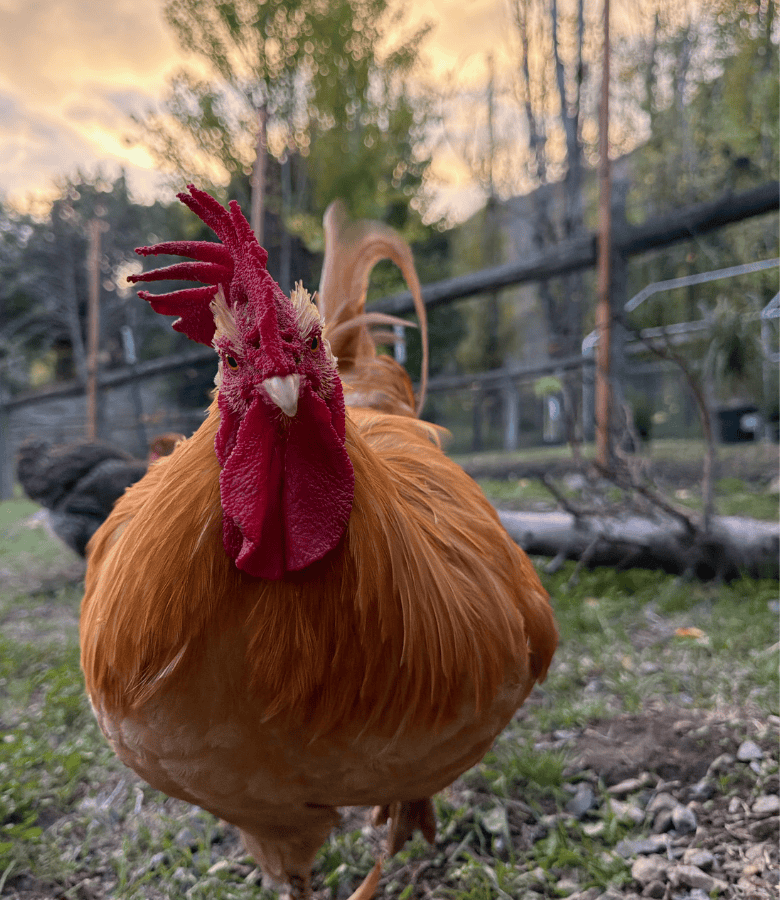
Getting to Know the Rooster
Roosters are the protectors of the flock. Always on the lookout for their hens and their baby chicks. They make different calls to alert their flock to take cover and give different vocals for if it’s a ground predator, air predator, something slightly concerning, something extremely concerning, and a full out take cover! Roosters are also always on the lookout for tasty treats and call their hens over with a action called tidbitting where they point towards a tasty treat as their ladies come running over. They will break up any hen squabbles to keep the peace of the flock. My rooster Butter even loves to get in the nest box where the hens will lay their eggs in the mornings to make sure it is safe and cozy for them. Once Butter gets the nest box all cozy he will lay there for a few minutes making the cutest cooing noises because of how happy he is.
So why do roosters with all these positive attributes seem to get labeled as aggressive? Loud? Too much? There’s alot to unpack in this section but at the heart of this I believe is a genuine misunderstanding of the rooster and lack or educational resources that are hard to find amongst the midst of hurtful and dominating tactics that most go to for quick ‘fixes’ that then get spread online.
California’s Anti-Rooster Laws
I full heartily disagree that we have a rooster problem. At the heart of this is people. Why look at just the issue when we can step back and look at the system in which it creates this issue for the rooster, not the rooster causing the problem?
I believe there’s two driving factors behind the strict laws on rooster keeping.
1. Noise
Todays homes in the states are also so insulated that hearing your or your neighbors rooster crowing in the morning isn’t actually a given if you’re inside. In my home in Puerto Rico I could hear everything but the windows had large gaps and so did all of the doors. Here in the states in a normal states constructed home? I wouldn’t even know I had roosters with how sound proof it is.
If we are looking at decimals, then it’s important to note that the roosters crow in studies are not that far off from a dog barking. Roosters typically crow early mornings and sporadically throughout the day, whereas a dog can bark at anytime during the day or night for much longer periods of times.
If the decals are near the same in these studies then it begs the question, if a community bans roosters based only on loudness, it’s worth questioning whether the standard for noise nuisance is being applied evenly across species.
2. Ban on Cockfighting
There absolutely should be protections in place to prevent roosters from being exploited for cockfighting. That is something we can all agree on. Roosters deserve safety and humane treatment just like all animals.
My concern is not with the goal of preventing cruelty. It is with how we go about achieving it.
Organizations like Rooster Sanctuary at Danzig’s Roost have shared detailed information about what often happens to roosters seized from cockfighting operations. In many cases, these roosters who have already endured extreme neglect and trauma are inhumanely euthanized without any steps to allow rescues to step in and get these roosters.
When policies aimed at stopping cruelty result in the inhumane euthanasia of the very animals we are trying to protect, it raises important questions about whether we are addressing root causes or actively creating new harms.
It is also worth asking how this approach differs from the way we address other forms of animal cruelty, such as dogfighting. We do not prohibit male dogs from being kept in residential areas as a preventative measure. Instead, we focus enforcement on criminal behavior.
Why should roosters be treated differently?
This is not written in opposition to lawmakers, but as an invitation to collaborate. I truly hope California does not proceed with measures such as AB 928 as it is written now. I hope we can expand the conversation to include humane rehabilitation options, sanctuary partnerships, and responsible ownership education. Solutions that protect the lives of roosters, not harm them in the process.
We all want less cruelty. Let’s make sure our solutions reflect that shared value.
Bill AB 928 for Roosters
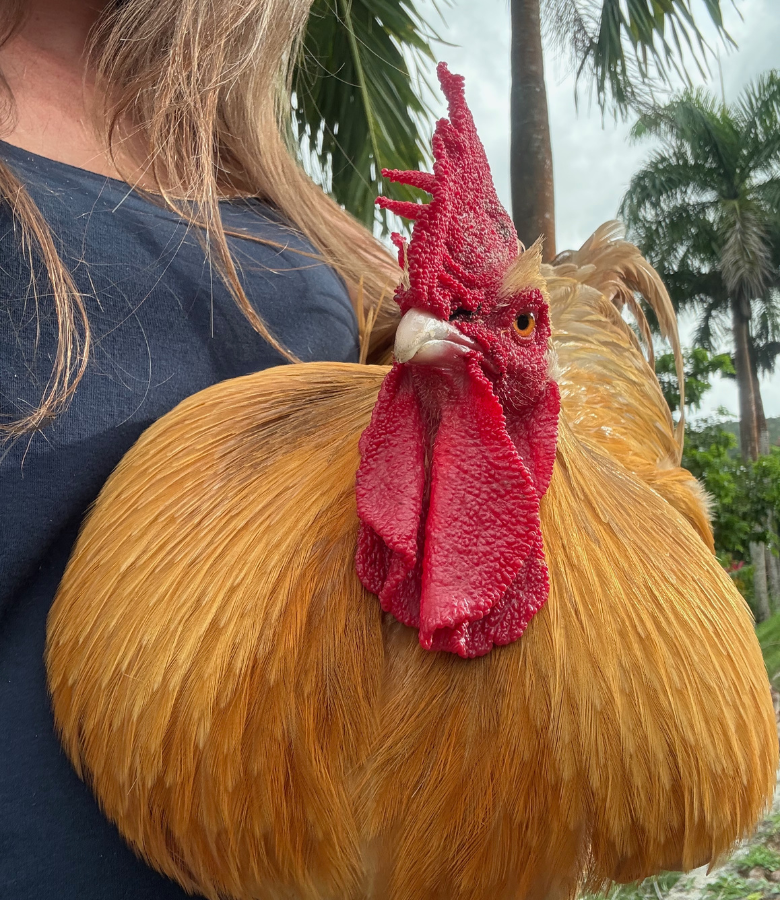
There is a new bill in California under the name AB 928 on limits on keeping roosters. This bill specifically states their intentions to prohibit: “This bill would prohibit a person from keeping or raising who keeps more than 3 roosters per acre, or 25 roosters total on any property, from keeping a rooster movement-constrained through the use of an enclosure or tether, except as specified.“
The way this bill is written to me does not go after the very specific reason for creating such a bill. In this case it is created to block those who wish to abuse animals in illegal cockfighting. But how it is written it would harm others. For example, what about those who keep bachelor flocks of 4 or 5 roosters on an acre in a bachelor pad or 10 roosters on 2 acres? Are they going to get an exemption? What about people who rescue roosters and don’t have an official non profit? In this language none of these examples would have an exception. What happens to those roosters? I think the policy makers understand that is going to cause people who are doing the right things to make awful decisions for their pets. If it is truly to protect the animals from illegal cockfighting and animal abuse, then it needs to be written that way. Where will these roosters go if this bill passes?
Resources and Next Steps
I hope that one day we can achieve better ethical treatment for roosters. To be part of this positive change for better chicken welfare, start where you are right now with your own rooster. Let’s begin improving rooster treatment by making a difference in our own flocks, how we approach working with them and how we speak about them.Sharing our experiences, connecting as a community more, getting back to nature, realizing the world belongs to animals just as it does us.
Some additional resources for understanding this bill:
- NoAB928 – A very in depth site all about this bill and who it truly would effect and ways to take action
- AV Daily News – CA Bill 928 aims to restrict rooster ownership in your property
I hope this post starts a conversation. A step towards changing perspectives. A step towards better treatment of roosters. The more we speak out and push for change the better for our animals.
Please share this post so that we can all start to have a better future for our roosters!

¿Estás buscando dónde comprar gallinas en Puerto Rico? Hay muchos criaderos que envían pollitos a Puerto Rico y también…
Continue Reading ¿A dónde conseguir gallinas ponedoras en Puerto Rico?

If you are looking for ways to build trust and bond with your chickens, this post is for you!…
Continue Reading Mindful Practices to Build Trust and Bond with Your Chickens

What my life working with horses has taught me about relationship building with roosters and how it can help you too.
Continue Reading What Horses Taught me About Relationship Building with Roosters

Having supplies on hand when you need them can be invaluable. As chicken keepers we know that our chickens…
Continue Reading Top 11 Chicken First Aid Kit Essentials to Have On Hand

Having a health issue with your chicken? Thankfully, there are several veterinary practices in Puerto Rico that will see…
Continue Reading Taking Your Chicken to the Vet in Puerto Rico

Are you finding yourself looking for ways to work better with your rooster? Perhaps you’ve read or been told…
Continue Reading How to Deal With an Aggressive Rooster: A Kinder Approach
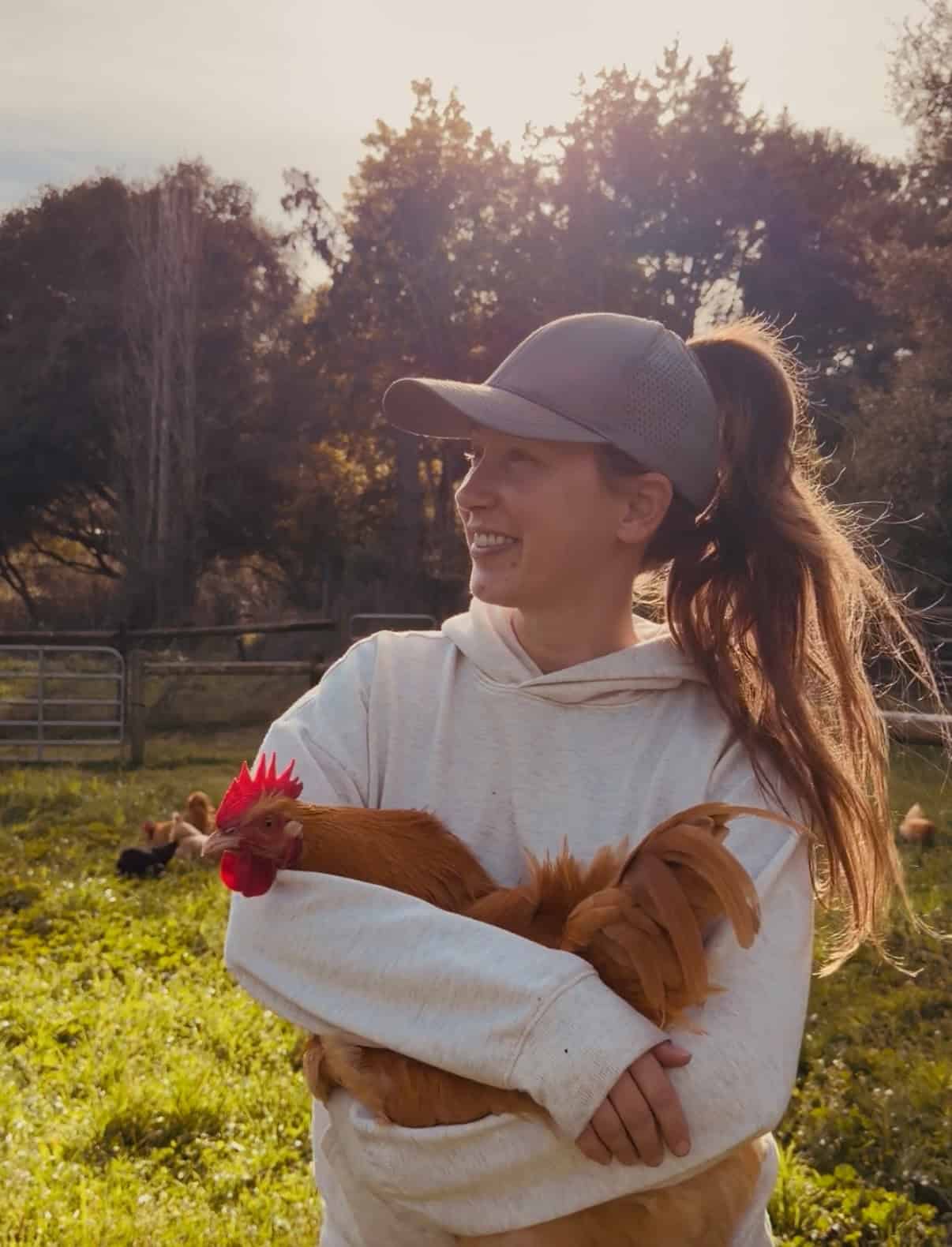
I’m Jess, a backyard chicken keeper in California. With my flock of 20 friendly chickens, my mission is to help others feel confident about raising happy, healthy, and super friendly chickens. My dream is that everyone gets to know the love of a chicken and experience the joy they bring to your life.
Leave a Reply